
Dingoes on K'gari at a glance
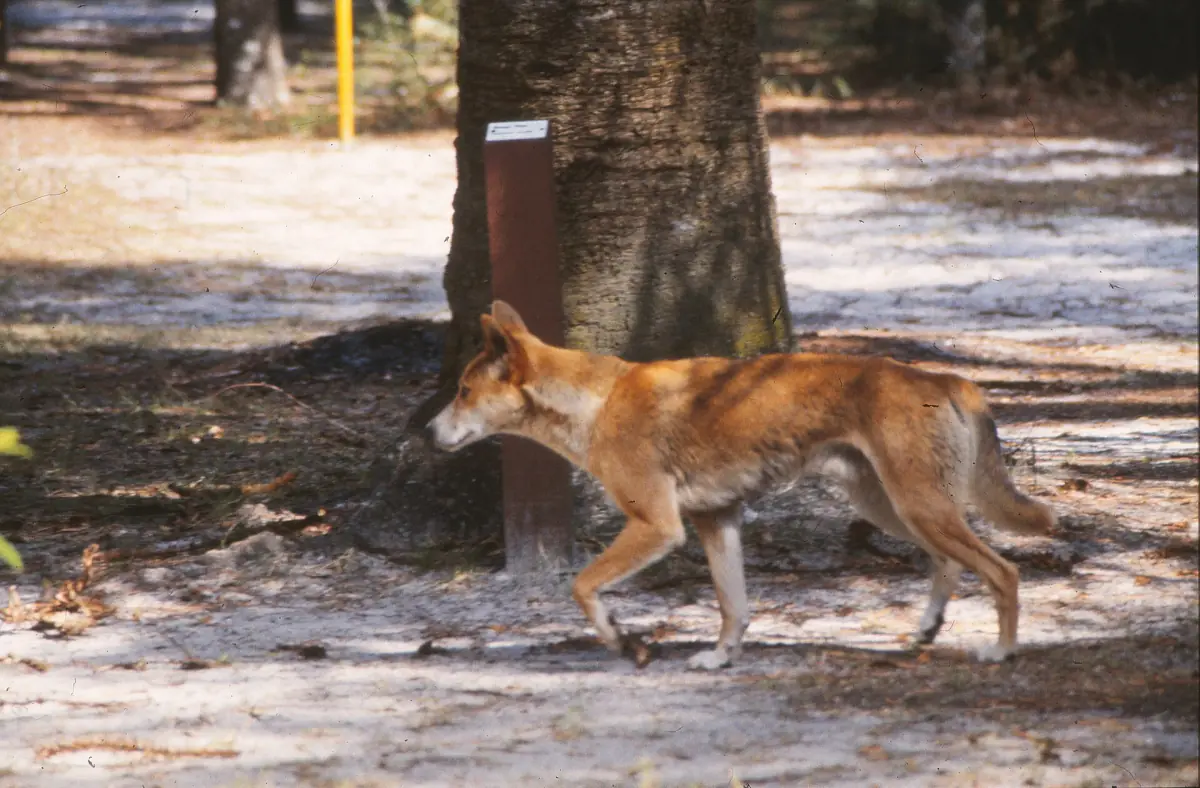
Dingoes live across K'gari (Fraser Island). The Butchulla, the island's Traditional Owners, call them wongari. You will see them on the beach, near campsites and around picnic areas. They are wild animals, and visitors who treat them like pets cause the harm that rangers then have to deal with.
The rules here come from Queensland Parks and Wildlife Service (QPWS). This guide is independent and is not run by the park service. The rules are simple: keep your distance, keep food out of reach and keep children close.
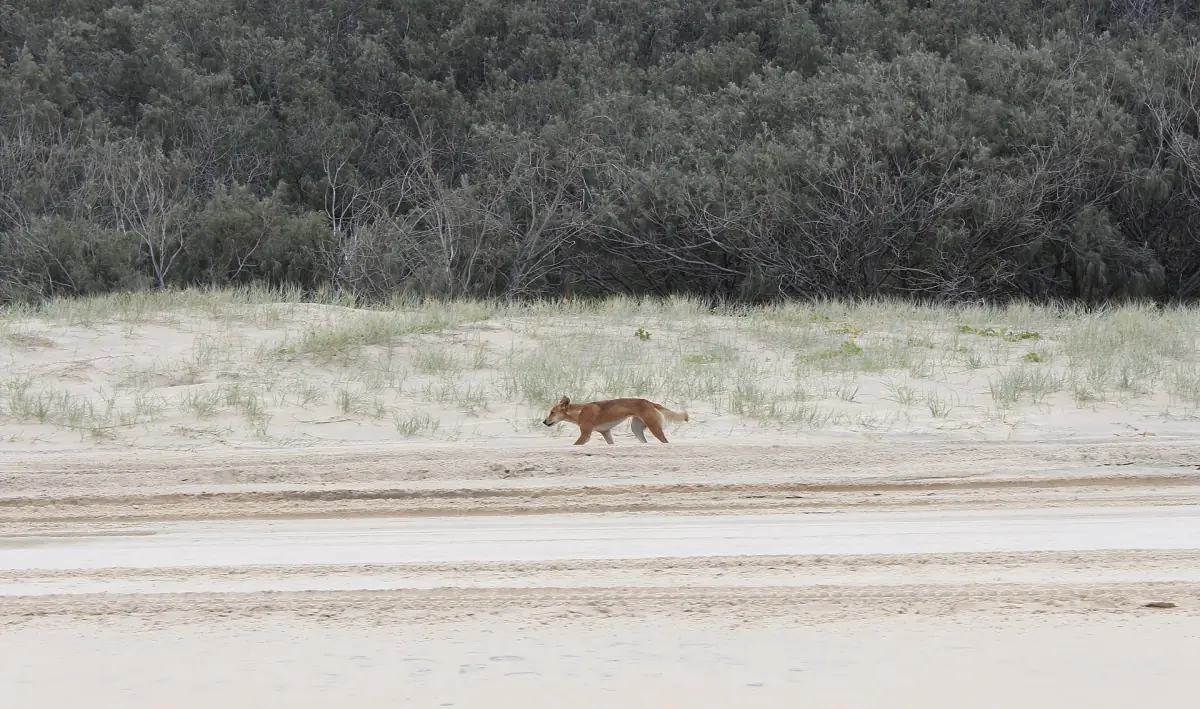
Fines in 2026
Published amounts, rounded as shown by QPWS. A penalty unit has been A$172.70 since 1 July 2026.
| Offence | Penalty units | On-the-spot fine | Maximum |
|---|---|---|---|
| Feeding or disturbing a dingo | 16 (maximum 165) | A$2,763 | A$28,495 |
| Leaving food unsecured | 3 (maximum 40) | A$518 | A$6,908 |
Unsecured food is a different offence from feeding, so a cooler left open does not carry the feeding maximum. It still carries a fine, and it is how most trouble starts.
Our pick: a guided tag-along trip
Our take: a lead guide and a mandatory safety briefing on the first morning cover the basics, but you still follow the dingo rules above at camp.
Hand-picked tours, booked through Viator. Prices are indicative starting prices in Australian dollars (as of October 2026). Tap a tour for live availability and the current price in your currency.
Guided trips with an experienced driver
A guide handles the driving and knows how to move around dingoes on the beach and at picnic areas.
Rules for every visitor
What to do on the beach, on the track and at camp.
Distance and children
Stay at least 20 m away, about 4 car lengths. Keep children, including young teenagers, within arm's reach at all times. Walk in groups, carry a long stick, and do not jog.
Food and rubbish
Never feed, lure, touch or disturb a dingo. Secure food, bait, fish scraps and rubbish where they cannot be reached. Keep no food or food containers in your tent. Do not eat in the open at a lake edge or on the beach. At Lake McKenzie, food and drinks other than water are banned at the shore, so use the fenced picnic areas.
Lake McKenzie guide →If a dingo approaches
Do not run. Face the animal and calmly back away toward your vehicle or the fence. Keep children within arm's reach.
Driving
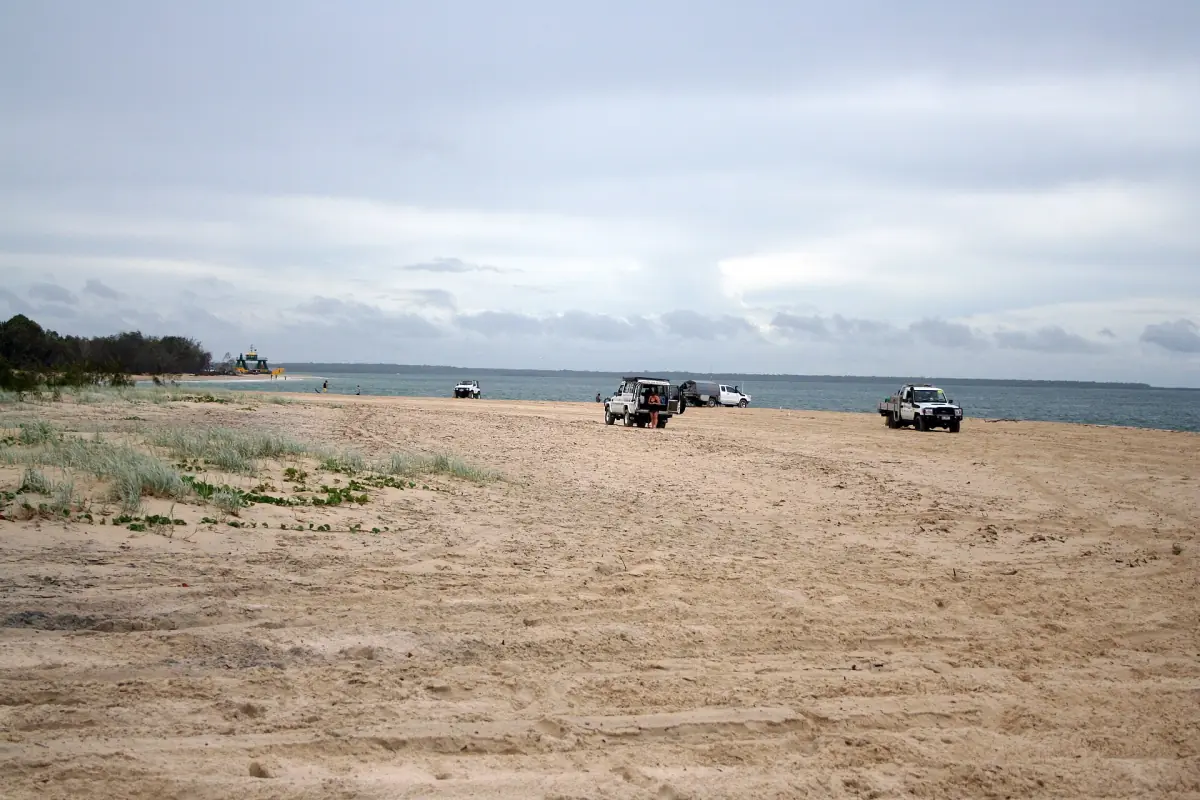
Pups and young animals use tracks and beaches in the rearing season, from 1 September to 30 November 2026. Drive slowly. The beach limit is 80 km/h unless signed, and 30 km/h applies on inland tracks, but those are upper limits and not safe speeds near animals.
75 Mile Beach guide →Camping
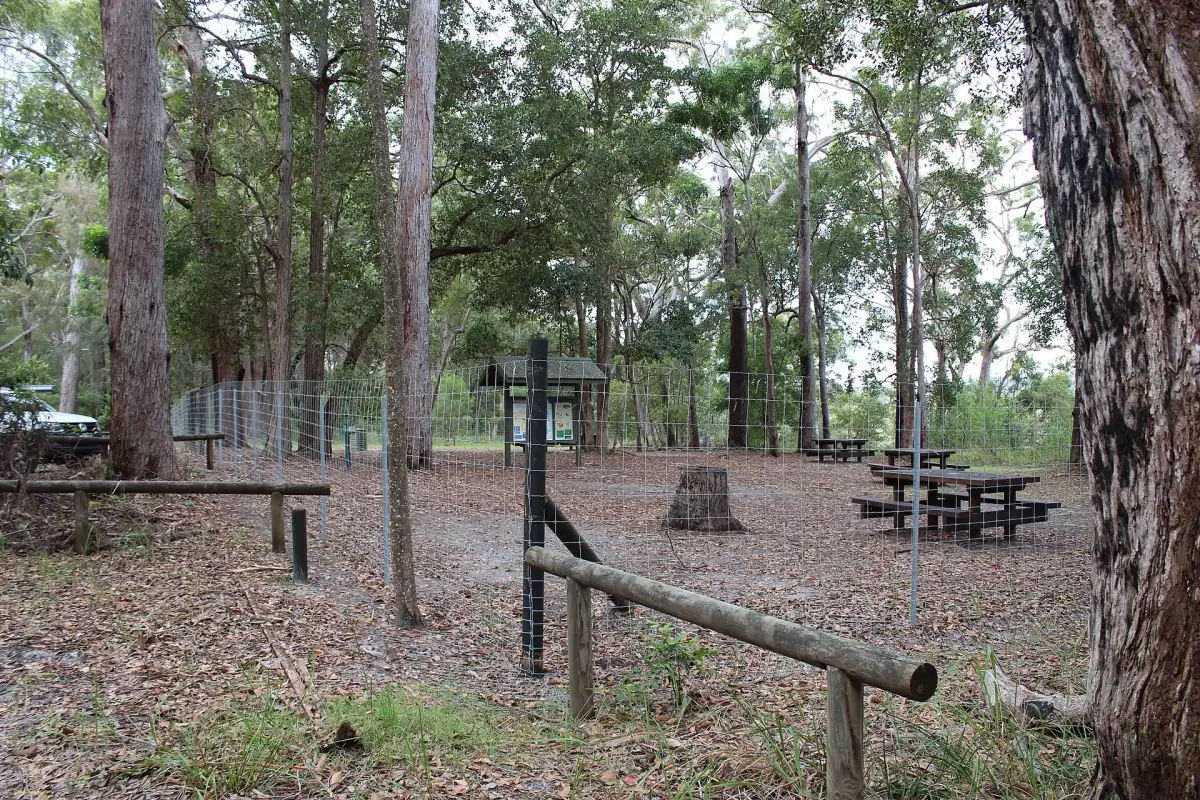
Fenced camps are described as dingo-deterrent, which does not mean dingo-free. QPWS recommends fenced camps for families with children aged up to and including 14. Keep food in a closed vehicle or container, never in the tent.
Camping guide →The same habits apply wherever you stop. On the beach, do not leave a picnic or a cooler on the sand while you swim or walk away. At a lake, eat only in the fenced picnic areas. At a campsite, keep rubbish in a closed bin or in your vehicle, and keep fishing bait and fish scraps out of reach. A dingo that finds food once will return to the same place.
Children are the most at risk, because they are small and move quickly. Hold young children by the hand near the water and on the beach, and do not let them walk ahead on tracks.
Why the rules are strict
Serious incidents have happened. In January 2024, several incidents near Hook Point involved children and an adult, and rangers later euthanised a marked dingo. In January 2025, a 4-year-old child was bitten on the shoulder in shallow water at Lake McKenzie, with superficial injuries reported. Rangers have also euthanised dingoes judged to be high risk after serious incidents, including in 2026.
The cause is almost always the same: dingoes learn that people mean food. A snack dropped on the beach teaches a dingo to approach the next visitor. That is why unsecured food is an offence, and why rangers can close or restrict camping areas where a pack has become used to people.
Plan your trip around the rules
Pages that matter most for dingo safety.
Dingoes on K'gari: frequently asked questions
Are dingoes on K'gari dangerous?
They are wild animals and can bite, especially when they have learned to link people with food or when a mother defends her pups. Follow the 20 m rule, keep children within arm's reach and secure all food.
How far away should I stay from a dingo?
At least 20 m, about 4 car lengths. If one approaches, do not run. Face it, stay calm and back away toward your vehicle or the fence.
What is the fine for feeding a dingo?
In 2026 the published on-the-spot fine is A$2,763 for feeding or disturbing a dingo, with a maximum of A$28,495. Unsecured food is a separate offence with a published A$518 on-the-spot fine and a A$6,908 maximum.
Is a fenced campsite completely safe?
No. The fences deter dingoes but do not guarantee that none enter. Keep food out of the tent and children within arm's reach even inside a fence.
Can I swim safely with dingoes around?
Lake swimming is described by QPWS, but dingoes also visit lake shores. Keep children close, do not eat at the shore, and leave if a dingo approaches. Ocean swimming is not recommended.
What is the dingo breeding season?
QPWS lists a rearing and emergence season from 1 September to 30 November 2026. Expect pups and young animals on tracks and beaches, and drive slowly.